

Brainspotting Therapy in Florida & Online
Heal Trauma, Anxiety, and Emotional Pain at the Nervous System Level
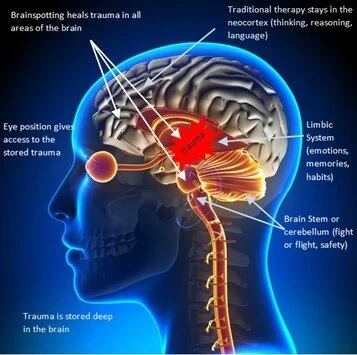
At Wild Joy Counseling, Brainspotting therapy helps you access and heal the deeper parts of the brain where trauma, chronic stress, and emotional pain are stored. Brainspotting is a powerful, neuroscience-informed therapy that supports healing beyond talk therapy by working directly with the nervous system.
If you struggle with anxiety, trauma, feeling stuck, chronic overwhelm, fertility challenges, or persistent emotional or physical symptoms, Brainspotting can help you move toward relief, clarity, and lasting change.
What Is Brainspotting?
Brainspotting is a therapeutic approach that identifies specific eye positions—called brainspots—that connect to unprocessed experiences stored in the subcortical (deep) brain. These brainspots act as access points to the nervous system, allowing the brain and body to naturally process and release what has been held beneath conscious awareness.
Developed in 2003 by Dr. David Grand, Brainspotting is based on the principle: “Where you look affects how you feel.” More than 13,000 therapists worldwide are trained in Brainspotting, and it continues to grow as a trusted trauma therapy.
Brainspotting integrates elements of EMDR, Somatic Experiencing, mindfulness, and relational therapy, while allowing your own nervous system to lead the healing process.
How Brainspotting Works
During a Brainspotting session, your therapist helps you find an eye position that activates a strong emotional or physical response. By mindfully staying with that brainspot in a safe, supportive environment, your brain can process unfinished experiences at its own pace.
Brainspotting works by:
Accessing the deeper brain where trauma and stress are stored
Regulating the nervous system
Releasing emotional and physical tension
Supporting integration and resilience
Brainspotting is both a method of understanding what your body and brain are holding and a treatment that supports healing at the same time.
What Brainspotting Can Help With
Brainspotting therapy is effective for a wide range of concerns, including:
Trauma and PTSD
Chronic anxiety and panic
Emotional overwhelm and burnout
Attachment wounds and relationship patterns
Infertility, fertility treatments, and reproductive trauma
Chronic pain and illness
Grief and loss
Dissociation and feeling disconnected
Performance blocks and creative blocks
Feeling stuck or unable to move forward in life
Many clients come to Brainspotting after feeling like traditional talk therapy hasn’t fully helped. Brainspotting goes deeper—without requiring you to relive or retell painful experiences in detail.
Brainspotting vs Talk Therapy
While talk therapy focuses on thoughts, insight, and behavior change, Brainspotting works directly with the nervous system and emotional brain. You don’t have to explain everything or find the “right words.” Your body already knows what needs attention.
Clients often experience:
Faster access to core issues
Deeper emotional release
Long-lasting shifts
Increased self-trust and inner clarity
Brainspotting at Wild Joy Counseling
At Wild Joy Counseling, Brainspotting sessions are warm, relational, and grounded in safety. We move at your pace and honor your body’s wisdom. Sessions may include mindfulness, somatic awareness, and gentle guidance to support integration.
Our work is especially supportive for people who are high-functioning yet internally overwhelmed, sensitive, or carrying long-standing emotional patterns.
Start Brainspotting Therapy
You don’t have to stay stuck in survival mode. Brainspotting therapy can help you reconnect with your body, release what you’ve been carrying, and move toward a life that feels more grounded, authentic, and alive.
Wild Joy Counseling offers Brainspotting therapy in Colorado and online.
Contact us today to schedule a consultation or learn more about whether Brainspotting is right for you.